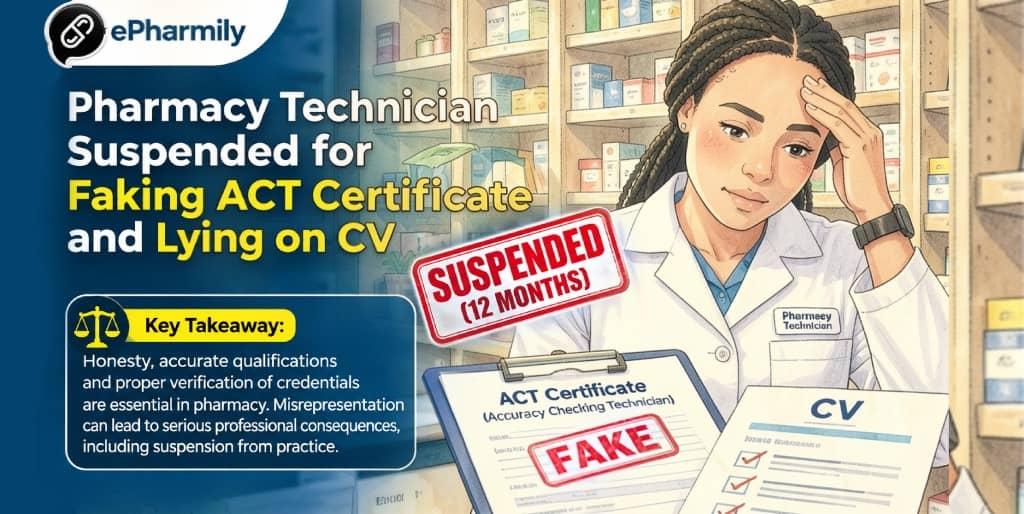
Pharmacy Technician Suspended for Faking ACT Certificate and Lying on CV: A Lesson in Professional Integrity

I stumbled upon an article with the headline: ⚠️ "Pharmacy Technician Suspended for Faking ACT Certificate and Lying on CV."
The report, published by Pharmacy Magazine, highlights a pharmacy regulatory case in the United Kingdom that raises important questions about professional integrity, qualification verification, honesty and accountability within the pharmacy profession.
According to the report, a pharmacy technician received a 12-month suspension following a General Pharmaceutical Council (GPhC) fitness-to-practise hearing over an inauthentic Accuracy Checking Technician (ACT) certificate and misrepresentation of professional qualifications and experience on her CV.
This incident serves as an important reminder that professional qualifications are not merely documents used to secure employment. They represent an individual's education, training, competence and readiness to undertake specific professional responsibilities.
But what exactly happened, and what lessons can pharmacy professionals and employers learn from this case?
See also : Negligence in Pharmacy Practice
What Happened?
According to the report, the pharmacy technician, Hellen Jane Wootton, provided Dalkeith Pharmacy with a certificate purporting to show that she had successfully completed an accredited Accuracy Checking Technician (ACT) training course.
She had also included information on her CV indicating that she had completed the relevant training and had experience working as an accredited Accuracy Checking Technician.
However, during the regulatory investigation, evidence obtained from Buttercups Training confirmed that she had not completed the ACT training programme.
The GPhC fitness-to-practise committee subsequently considered the allegations and evidence presented during the proceedings.
Following its assessment, the committee imposed a 12-month suspension from the pharmacy register.
It is important to clarify that the committee did not find evidence that she personally created the certificate or instructed someone else to produce it. The allegation that she had actually worked as an ACT during the period in question was also dismissed.
Nevertheless, the findings concerning the certificate and misrepresentation of qualifications resulted in serious professional consequences.
See also : Why I Quit My Pharmacist Job ?
What Is an Accuracy Checking Technician (ACT)?
An Accuracy Checking Technician is a pharmacy professional who has completed the required training and assessment to undertake specified prescription accuracy-checking responsibilities within an appropriate professional and regulatory framework.
ACTs play an important role in pharmacy practice by checking dispensed medicines against prescriptions to help identify potential dispensing errors before medicines reach patients.
Their responsibilities require appropriate training, competence, attention to detail and adherence to professional standards.
Because accuracy checking is an important part of medication safety, employers must ensure that individuals undertaking these responsibilities have the necessary qualifications, training and authorization.
See also : Is a Career in Pharmacy still Worth It ?
Why Is Professional Integrity Important in Pharmacy?
Pharmacy is a profession built on public trust, patient safety, professional competence and ethical responsibility.
Patients depend on pharmacy professionals to provide accurate medication information, dispense medicines appropriately and perform their responsibilities within the limits of their competence.
Misrepresenting qualifications or professional experience undermines these principles.
Here are five reasons professional integrity matters.
1. Patient Safety Must Come First
Pharmacy professionals perform responsibilities that can directly affect patient health and safety.
When individuals claim qualifications or competencies they have not acquired, there is a risk that they may undertake responsibilities beyond their actual training or competence.
2. Professional Qualifications Must Be Genuine
Academic certificates, professional registrations and specialized training qualifications must accurately reflect an individual's achievements.
Presenting an unearned qualification as genuine can damage professional credibility and expose an individual to disciplinary consequences.
Pharmacy professionals should always provide truthful information about their education, training, certifications and work experience.
3. Honesty Builds Professional Trust
Trust is fundamental to relationships between pharmacists, pharmacy technicians, employers, patients and regulatory authorities.
Employers must be able to rely on the accuracy of information provided during recruitment and professional assessments.
Misrepresentation can damage that trust and undermine confidence in the wider profession.
4. Professional Accountability Has Consequences
Pharmacy professionals are accountable for their conduct and must comply with applicable professional and regulatory standards.
Depending on the circumstances and jurisdiction, dishonesty, falsification of qualifications or misrepresentation may result in disciplinary proceedings, suspension or other regulatory sanctions.
4. Professional Reputation Takes Time to Build
Years of education, examinations, training and professional experience contribute to an individual's reputation.
Dishonest representation of qualifications can undermine years of professional development and potentially affect future employment and registration opportunities.
What Should Pharmacy Employers Learn From This Case?
This incident also highlights the importance of proper recruitment procedures and credential verification.
Pharmacies, hospitals, pharmaceutical companies and other healthcare organizations should not rely exclusively on information provided in CVs or certificates submitted by prospective employees.
Employers should consider the following measures:
1. Verify professional qualifications
Contact the relevant educational institutions, training providers or awarding organizations to confirm that certificates are genuine.
2. Confirm professional registration
Where applicable, verify registration status and professional standing directly with the relevant regulatory authority.
3. Authenticate specialized training certificates
Qualifications relating to specialized pharmacy responsibilities, including accuracy checking, should be verified with the appropriate training provider.
4. Conduct thorough employment checks
Review employment history, professional experience, references and previous responsibilities before making recruitment decisions.
5. Establish clear professional standards
Employees should understand the importance of honesty, accountability and working within their verified competence.
المراجع