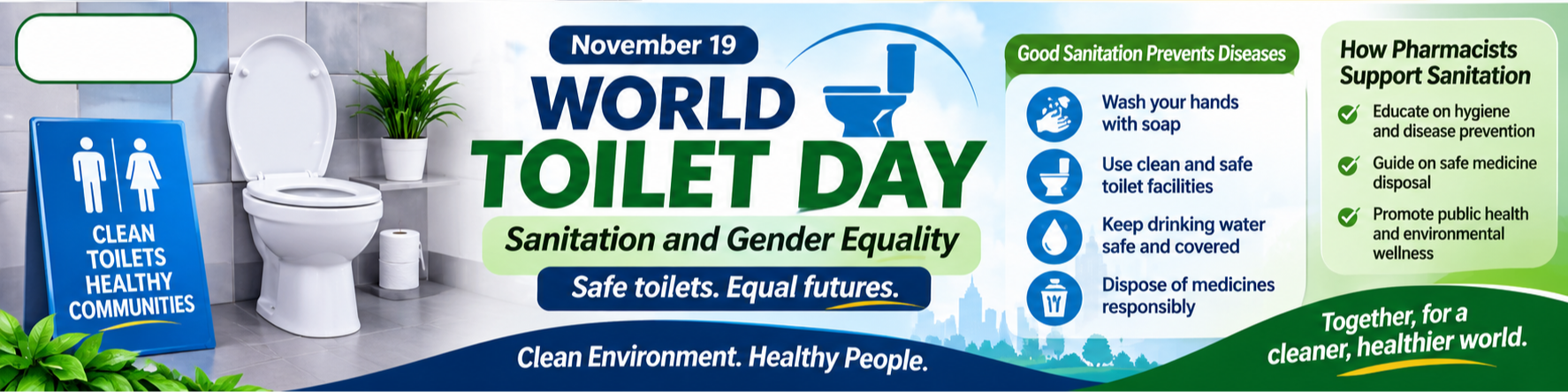
World Toilet Day 2026: How Proper Sanitation Protects Health and Prevents Disease.

Every year on November 19, the world observes World Toilet Day to raise awareness about the importance of safe sanitation and access to proper toilet facilities.
Although toilets may seem like an ordinary part of everyday life, access to clean and safe sanitation is an important public health issue.
The 2026 theme is “Sanitation and Gender Equality,” with the campaign message, “Safe toilets. Equal futures.”
The theme highlights how access to safe toilets, clean water, soap and proper hygiene facilities protects health, dignity and safety, particularly for women and girls.
But sanitation is not just about having a toilet. It is also about preventing diseases, protecting water sources and maintaining a healthy environment.
Why Is Proper Sanitation Important?
Poor sanitation can create conditions that allow harmful microorganisms to spread.
When human waste is not properly managed, it can contaminate drinking water, food and the surrounding environment.
This can contribute to the spread of several diseases, including:
1. Cholera
Cholera is an acute diarrhoeal infection caused by the bacterium Vibrio cholerae. It spreads mainly through contaminated food and water. Severe cases can cause dangerous dehydration and require immediate treatment.
2. Typhoid Fever
Typhoid fever is caused by Salmonella Typhi. It is commonly transmitted through food or water contaminated with the faeces of an infected person.
3. Diarrhoeal Diseases
Poor sanitation and unsafe drinking water increase the risk of diarrhoeal infections. Frequent diarrhoea can lead to dehydration, especially in young children.
4. Intestinal Worm Infections
Some intestinal worms spread through contact with contaminated soil or food. Proper disposal of human waste, handwashing and good personal hygiene help reduce transmission.
What Is the Connection Between Sanitation and Pharmacy?
You may wonder what toilets and sanitation have to do with pharmacy.
The connection is public health.
Pharmacists do not only provide medicines for people who are already sick. They also contribute to disease prevention through health education and responsible healthcare practices.
Here are some important connections:
1. Promoting Hand Hygiene
Handwashing with soap and clean water after using the toilet is one of the simplest ways to reduce the spread of infections.
Pharmacists can educate patients and communities about proper handwashing, personal hygiene and the importance of using safe water.
2. Preventing the Spread of Diarrhoeal Diseases
Pharmacists can provide guidance on oral rehydration salts (ORS), explain their correct preparation and use, and recognise when a patient needs urgent medical attention.
For example, severe dehydration, blood in the stool or persistent vomiting requires prompt medical assessment.
3. Encouraging Responsible Antibiotic Use
Poor sanitation contributes to the spread of infections, some of which may require antibiotics.
However, antibiotics should only be used when medically indicated and under appropriate professional guidance. Taking antibiotics unnecessarily or without a prescription can contribute to antimicrobial resistance.
4. Promoting Safe Disposal of Medicines
This is another important connection that is often overlooked.
Expired or unused medicines should not automatically be thrown into toilets or sinks. Some pharmaceutical substances can enter wastewater systems and the environment when disposed of improperly.
The recommended disposal method depends on the medicine and local regulations. Where available, medicine take-back programmes are generally preferred. People should check the product instructions or ask a pharmacist about safe disposal.
5. Supporting Environmental Health
Pharmacists can educate patients about the relationship between medicine use, waste management, clean water and environmental protection.
Responsible pharmaceutical waste management helps protect communities and the environment.
How Can Individuals Promote Better Sanitation?
Everyone has a role to play in maintaining a clean and healthy environment.
Simple practices include:
-
Always wash your hands with soap and clean water after using the toilet.
-
Use clean and properly maintained toilet facilities.
-
Avoid open defecation.
-
Keep drinking water in clean, covered containers.
-
Dispose of human waste safely.
-
Avoid throwing medicines into toilets or drains unless the medicine's instructions specifically require it.
-
Seek medical attention when symptoms of serious infections occur.
Why Does World Toilet Day Matter?
Access to safe sanitation is about more than convenience. It protects people from preventable illnesses and helps communities live with dignity.
Women and girls are particularly affected when toilets are unsafe, unavailable or lack privacy and adequate menstrual hygiene facilities. Safe sanitation allows them to attend school, work and participate in everyday activities with greater confidence and security.
Healthcare professionals, including pharmacists, can help by educating the public about hygiene, infection prevention, responsible medicine use and environmental health.
This World Toilet Day, remember that protecting health does not begin only in hospitals and pharmacies. It also begins with clean toilets, safe water and good hygiene practices.
Referințe