
Introduction
Do you sometimes feel tired even after getting enough sleep? Do you become dizzy easily or feel breathless after doing simple activities?
These symptoms can happen for many reasons, but one possible cause is anaemia.
Anaemia is a common health condition that affects the blood and makes it harder for the body to get enough oxygen. It can affect people of different ages, including children, adults and pregnant women.
In this article, we'll explain what anaemia means, what causes it, the signs to look out for and how it can be treated.
What Is Anaemia?
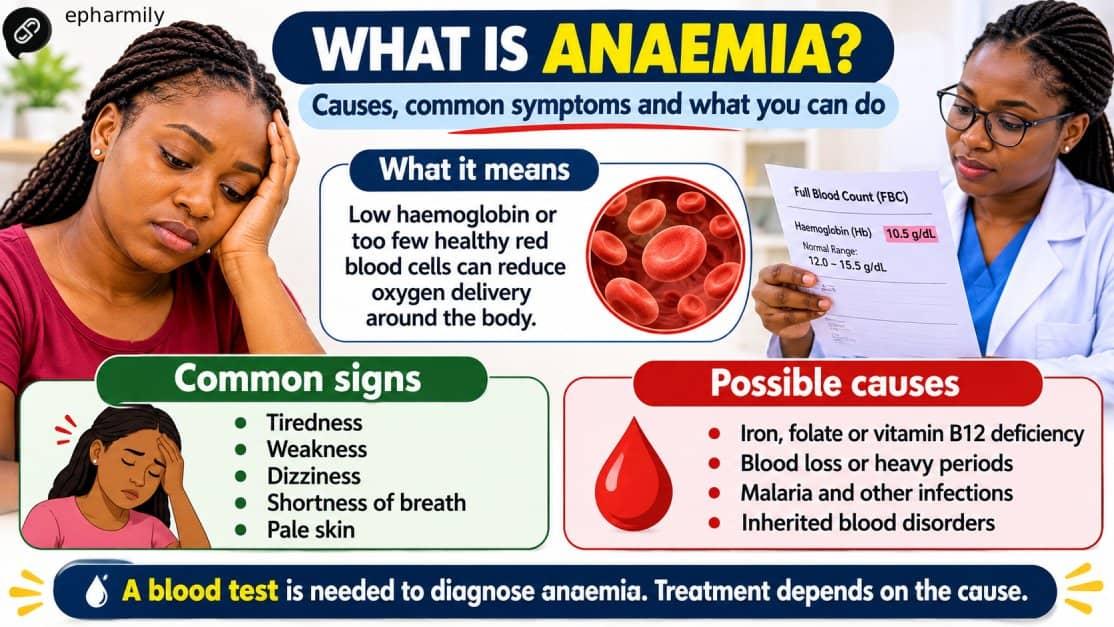
Anaemia is a condition in which the body has fewer healthy red blood cells than it needs or does not have enough haemoglobin.
Haemoglobin is a protein found in red blood cells. Its job is to carry oxygen from the lungs to the rest of the body.
When haemoglobin is too low, the body's organs and tissues may not receive enough oxygen. This can make a person feel weak, tired or short of breath.
It is important to know that anaemia is not always caused by a lack of iron. Several health conditions and nutritional problems can lead to it.
See also :- Diphtheria: Causes, Symptoms, Outbreaks, Treatment
What Causes Anaemia?
There are different causes of anaemia. Some of the common ones include:
1. Iron deficiency
Iron helps the body produce haemoglobin. When the body does not have enough iron, it may struggle to make healthy red blood cells.
Iron deficiency can happen because of poor dietary intake, blood loss or problems absorbing iron.
2. Heavy menstrual bleeding
Women who experience very heavy or prolonged menstrual periods may lose more blood than their bodies can easily replace.
Over time, this can lead to iron deficiency anaemia.
3. Pregnancy
During pregnancy, the body needs more iron to support the mother and the developing baby.
When iron needs are not met, a pregnant woman may develop anaemia.
4. Vitamin B12 or folate deficiency
The body needs vitamin B12 and folate to produce healthy red blood cells.
Not getting enough of these nutrients, or having difficulty absorbing them, can cause certain types of anaemia.
5. Infections and other illnesses
Some infections and long-term health conditions can affect how the body produces or maintains red blood cells.
In Nigeria and other malaria-endemic countries, malaria can also contribute to anaemia because it destroys red blood cells.
6. Inherited blood conditions
Some inherited conditions, such as sickle cell disease and thalassemia, can affect haemoglobin or red blood cells and lead to anaemia.
What Are the Common Signs and Symptoms of Anaemia?
The symptoms may depend on how severe the anaemia is and what is causing it.
Some common signs include:
-
Constant tiredness: Feeling exhausted even after resting.
-
Weakness: Having less energy to carry out everyday activities.
-
Dizziness: Feeling light-headed, especially when standing up.
-
Shortness of breath: Becoming breathless more easily than usual.
-
Pale skin: The skin or the inside of the lower eyelids may look paler than usual.
-
Headaches: Experiencing frequent headaches.
-
Fast heartbeat: Feeling that your heart is beating faster than usual.
Some people have mild anaemia without obvious symptoms. This is why blood tests can be important, especially for people with risk factors.
See also :- Antibiotic Resistance: Causes, Risks, and How to Prevent It
Who Is More Likely to Develop Anaemia?
Anaemia can affect anyone, but some groups may be more vulnerable.
These include:
-
Pregnant women.
-
Women with heavy menstrual periods.
-
Babies and young children.
-
Teenagers going through rapid growth.
-
People who do not get enough iron, vitamin B12 or folate from their diet.
-
People living with certain long-term illnesses.
-
People with inherited blood disorders.
Having one of these risk factors does not automatically mean someone has anaemia. A proper medical assessment is needed.
How Is Anaemia Diagnosed?
Anaemia cannot be confirmed by looking at someone's skin or judging how tired they feel.
A healthcare professional usually recommends a blood test to check haemoglobin levels.
One common test is the Full Blood Count (FBC), also called a Complete Blood Count (CBC).
Depending on the results and suspected cause, additional tests may be needed. These may include tests for iron levels, vitamin B12, folate or inherited blood conditions.
If you have symptoms that concern you, visit a hospital or clinic for proper assessment.
Can Anaemia Be Treated?
Yes. Anaemia can often be treated, but the right treatment depends on what is causing it.
For example:
-
Iron deficiency anaemia: May be treated with iron supplements and dietary changes.
-
Vitamin B12 deficiency: May require vitamin B12 tablets or injections, depending on the cause.
-
Folate deficiency: May require folic acid treatment.
-
Anaemia caused by an underlying illness: Treatment may focus on managing that illness.
-
Inherited blood conditions: May require specialist care and regular monitoring.
In severe cases, hospital treatment or a blood transfusion may be necessary.
Do not start taking iron supplements simply because you feel tired. Not all anaemia is caused by iron deficiency, and taking unnecessary iron can be harmful. Get tested and follow a healthcare professional's advice.
See also :- High Blood Pressure And Its Early Signs
What Foods Can Help Prevent Nutritional Anaemia?
Eating a balanced diet can help provide nutrients needed for healthy blood production.
Some useful food choices include:
Iron-rich foods
-
Beef and other meats.
-
Fish and poultry.
-
Beans and lentils.
-
Dark green leafy vegetables.
-
Iron-fortified cereals.
Foods containing vitamin B12
-
Fish.
-
Meat.
-
Eggs.
-
Milk and other dairy products.
Foods containing folate
-
Beans.
-
Green leafy vegetables.
-
Avocado.
-
Citrus fruits.
Vitamin C helps the body absorb iron from plant-based foods. Eating fruits such as oranges alongside iron-containing meals can be helpful.
Food can support good nutrition, but it may not be enough to treat anaemia that is already present.
See also :- Type 2 Diabetes and Early Warning Signs
When Should You See a Doctor?
Speak to a healthcare professional if you experience persistent tiredness, dizziness, unusual weakness, pale skin or shortness of breath.
You should also seek medical advice if you have very heavy menstrual bleeding or suspect you may be losing blood.
Seek urgent medical attention if you experience chest pain, fainting, severe difficulty breathing or a very rapid heartbeat, especially if these symptoms are sudden or severe.
❗Anaemia is more than just feeling tired. It is a health condition that affects the blood's ability to carry oxygen around the body.
Although iron deficiency is a common cause, anaemia can also result from vitamin deficiencies, blood loss, infections and inherited conditions.
The good news is that many forms of anaemia can be treated once the cause is identified.
If you notice unusual tiredness, dizziness or other symptoms, do not simply assume you need iron. Speak to a healthcare professional and get the appropriate blood tests.
Note: Understanding the cause is the first step towards getting the right treatment.
Referencias