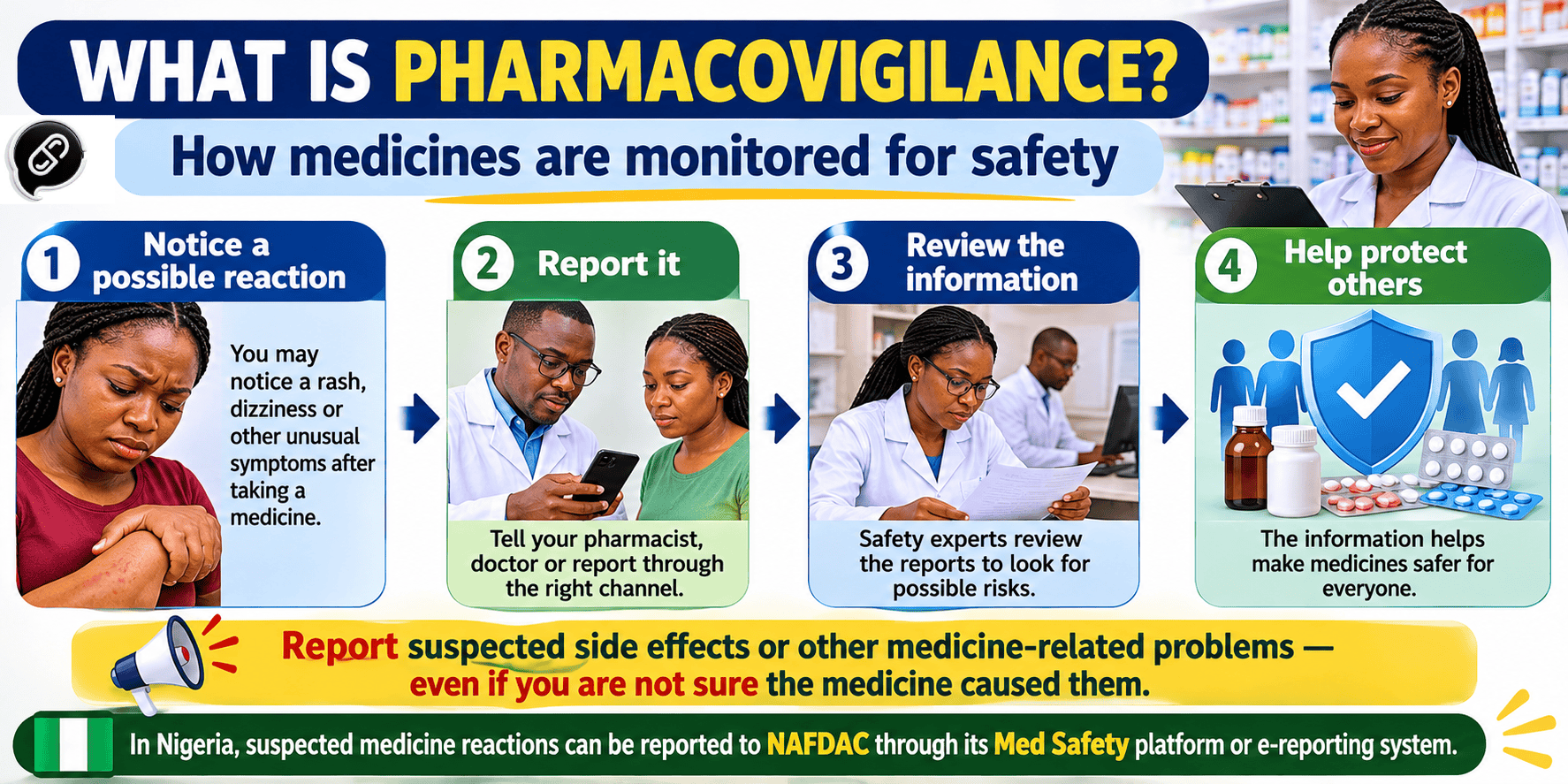
What Is Pharmacovigilance? Understanding How Medicines Are Monitored for Safety

Introduction
Medicines help us treat illnesses, manage health conditions and prevent diseases. But have you ever wondered what happens when someone experiences an unexpected reaction after taking a medicine?
For example, someone takes a prescribed medicine and later develops a skin rash, dizziness or unusual discomfort. How is this information collected, and who checks whether the medicine could be responsible?.
This is where pharmacovigilance comes in.. 👌
It may sound like a complicated medical term, but the idea is simple: it is about keeping track of medicine safety and helping to protect people from avoidable harm.
Let's take a closer look at what pharmacovigilance means and why it matters.
What Is Pharmacovigilance? 🤔
Pharmacovigilance is the process of monitoring medicines to identify, understand and prevent harmful effects or other problems related to their use.
In simple terms, it helps healthcare professionals and medicine safety authorities find out how medicines affect people after they become available for public use.
Even though medicines go through testing before they are approved, some problems may only become noticeable when large numbers of people start using them.
Pharmacovigilance helps collect and review information about these problems so that appropriate safety measures can be taken.
Why Is Pharmacovigilance Important? 🤔
Pharmacovigilance plays an important role in protecting patients and improving the safe use of medicines.
Here are some reasons it matters:
1. It helps identify unexpected side effects
Some medicine reactions may not be noticed during clinical trials because only a limited number of people take part.
When more people begin using a medicine, less common reactions may become noticeable.
Monitoring helps identify these possible problems.
2. It helps prevent harm
When a medicine safety concern is identified, the relevant authorities can investigate and decide whether action is needed.
This may include updating medicine instructions, issuing safety warnings, restricting certain uses or, in some cases, recalling a product.
3. It improves patient safety
Information collected from patients and healthcare professionals helps improve understanding of how medicines affect different people.
This can support safer treatment decisions.
4. It helps people use medicines correctly
Pharmacovigilance also helps identify problems such as medication errors, misuse and harmful interactions between medicines.
This information can help healthcare professionals give better advice to patients.
What Is an Adverse Drug Reaction? 🤔
An adverse drug reaction is an unwanted or harmful response that occurs after a person uses a medicine.
For example, someone may develop a rash, dizziness, nausea or another unexpected reaction after taking a medicine.
Not every unpleasant symptom is caused by a medicine. However, if a reaction is suspected, it is worth discussing with a healthcare professional.
It is also important to understand that a suspected reaction does not automatically prove that the medicine caused it. The report needs to be assessed.
What Are Some Examples of Medicine Reactions That Should Be Reported? 🤔
Examples include:
-
A skin rash or itching that starts after taking a medicine.
-
Unusual dizziness after starting a new treatment.
-
Severe nausea or vomiting following medication use.
-
Swelling or other unexpected symptoms after taking a medicine.
-
A medicine that appears not to be working as expected.
-
A possible problem caused by taking the wrong dose or combining medicines.
These examples do not mean the medicine is definitely responsible. A healthcare professional can help assess what may have happened.
Who Can Report a Suspected Medicine Reaction? 🤔
Pharmacovigilance is not only the responsibility of doctors and pharmacists.
Patients and caregivers can also play an important role.
People who can report suspected medicine-related problems include:
-
Parents or caregivers reporting on behalf of someone they care for.
-
Doctors.
-
Pharmacists.
-
Nurses.
-
Other healthcare professionals.
You do not have to be a medical expert to raise a concern about a reaction you have experienced.
How Does Pharmacovigilance Work in Nigeria? 🤔
In Nigeria, the National Agency for Food and Drug Administration and Control (NAFDAC) is responsible for monitoring the safety of medicines and other regulated products.
NAFDAC collects and reviews reports of suspected adverse reactions and other medicine-related problems.
There are ways to report these problems, including:
1. Through the NAFDAC Med Safety platform
The Med Safety platform allows members of the public and healthcare professionals to submit reports of suspected reactions to medicines and medical products.
2. Through NAFDAC's online e-reporting system
Reports can also be submitted through the e-reporting platform on the NAFDAC website.
3. Through a healthcare professional
You can tell your doctor or pharmacist about a suspected reaction and ask for help reporting it.
You can visit the official NAFDAC website for reporting information: https://nafdac.gov.ng/
What Information Should You Provide When Reporting a Reaction? 🤔
When reporting a suspected medicine reaction, try to provide clear and accurate information.
You may be asked for:
-
The name of the medicine, including its brand or generic name.
-
The reaction or symptoms you experienced.
-
When the symptoms started.
-
When you started taking the medicine.
-
Your age and other basic patient details requested on the form.
-
Any other medicines you were taking at the time.
Providing accurate information helps the relevant professionals assess the report.
What Should You Do If You Experience a Side Effect? 🤔
If you notice an unusual reaction after taking a medicine, do not ignore it.
Here are some steps to take:
-
Contact a healthcare professional: Speak to a doctor or pharmacist about the symptoms.
-
Keep the medicine information: Note the medicine's name, dose and when you started taking it.
-
Describe what happened: Explain the symptoms and when they began.
-
Report the suspected reaction: Ask how to submit a report through the appropriate channel.
-
Follow professional advice: Do not change or stop your treatment without guidance, unless you need immediate emergency care.
If you experience difficulty breathing, swelling of the face or throat, collapse or another severe reaction, seek emergency medical attention immediately
🎗Pharmacovigilance may be a big word, but its purpose is straightforward: to help make medicines safer for everyone.
By monitoring medicine-related problems and reporting suspected reactions, patients and healthcare professionals contribute to a better understanding of medicine safety.
Remember, you do not have to be certain that a medicine caused a reaction before raising a concern. Reporting a suspected problem can help safety experts investigate it.
☺️ Your experience with a medicine could help protect someone else.☺️
Referințe