
Introduction
Have you ever felt unusually thirsty, tired, or noticed that you visit the toilet more often than usual? These symptoms may seem ordinary, but sometimes they can be signs of a health condition that needs attention.
One condition worth knowing about is type 2 diabetes.
Diabetes is a common health condition that affects how the body controls blood sugar. It can develop gradually, and some people may have it for years without knowing.
In this article, we’ll explain what type 2 diabetes is, the signs to look out for, who may be at risk, and simple steps that can help reduce the risk.
What Is Type 2 Diabetes?
Type 2 diabetes is a condition in which the body does not use insulin properly or cannot produce enough insulin to keep blood sugar within a healthy range.
Insulin is a hormone that helps sugar (glucose) move from the bloodstream into the body’s cells, where it is used for energy.
When insulin does not work properly, sugar can build up in the blood. Over time, this may lead to health problems affecting the heart, kidneys, eyes, nerves, and blood vessels.
Type 2 diabetes is the most common type of diabetes. It can affect adults and younger people.
Early Warning Signs of Type 2 Diabetes
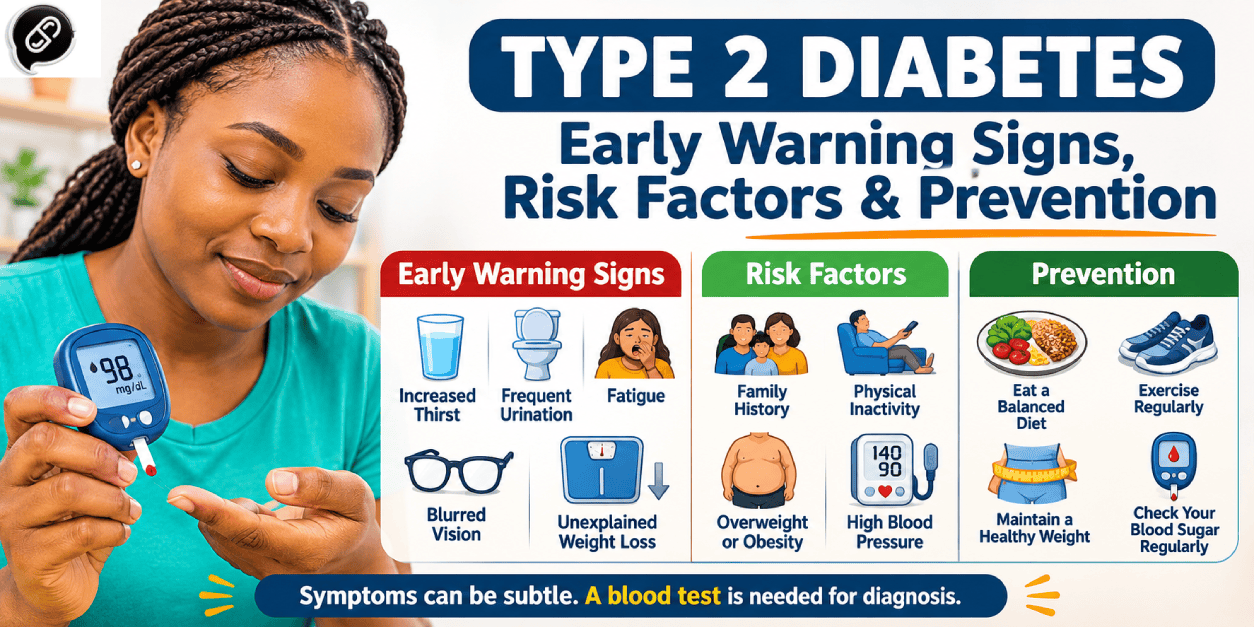
The symptoms of type 2 diabetes often develop slowly. Some people may not notice anything unusual at first.
Common warning signs include:
1. Feeling thirsty more often
You may feel thirsty even after drinking water. This can happen because high blood sugar causes the body to lose more fluid.
2. Frequent urination
You may find yourself visiting the toilet more often than usual, including during the night.
3. Feeling unusually tired
You may feel weak or tired even after getting enough rest. This can happen when your body struggles to use glucose properly for energy.
4. Blurred vision
High blood sugar can affect the eyes and cause temporary blurred vision.
5. Unexplained weight loss
Some people lose weight without trying, even when their eating habits have not changed.
6. Wounds that heal slowly
Cuts and sores may take longer to heal than usual.
Important: These symptoms do not automatically mean you have diabetes. Other conditions can cause similar problems. A blood test is needed to diagnose diabetes.
Who Is at Risk of Type 2 Diabetes?
Anyone can develop type 2 diabetes, but some factors can increase the risk.
Common risk factors include:
-
Family history: Having a parent or sibling with diabetes may increase your risk.
-
Being overweight: Excess body weight, particularly around the waist, can increase the risk.
-
Physical inactivity: Spending most of the day sitting and getting little exercise may contribute.
-
Age: The risk generally increases as people get older, although younger people can also develop type 2 diabetes.
-
High blood pressure: Having hypertension is associated with a higher risk.
-
Previous gestational diabetes: Women who developed diabetes during pregnancy have a higher risk of type 2 diabetes later.
Having one or more risk factors does not mean you will definitely develop diabetes. It simply means you may benefit from paying closer attention to your health and discussing screening with a healthcare professional.
How Can You Help Prevent Type 2 Diabetes?
Type 2 diabetes cannot always be prevented, especially when genetics and other factors are involved. However, healthy lifestyle changes can help reduce the risk or delay its development.
1. Eat balanced meals
Try to include vegetables, fruits, beans, whole grains, and protein sources in your meals.
You do not have to stop eating your favorite Nigerian foods completely. Instead, pay attention to portions and balance your meals.
For example, you can enjoy rice, yam, or swallow with vegetables and a suitable protein source, while limiting excessive portions and sugary drinks.
2. Be physically active🏋️♀️
Regular physical activity helps your body use insulin more effectively.
You can start with simple activities such as:
-
Walking regularly.
-
Dancing.
-
Cycling.
-
Taking the stairs when possible.
-
Doing household activities that keep you moving.
Aim for regular activity that suits your health and fitness level. If you have a medical condition or have not exercised for a long time, ask a healthcare professional how to start safely.
3. Maintain a healthy weight
If you are overweight, even modest weight loss may help reduce your risk of developing type 2 diabetes.
Avoid extreme diets or unverified weight-loss products. Focus on realistic changes you can maintain over time.
4. Reduce sugary drinks
Frequent consumption of sugary drinks can contribute to excess calorie intake and weight gain.
Try drinking water more often and reducing sugary soft drinks, sweetened juices, and other beverages with added sugar.
5. Avoid smoking🚭
Smoking increases the risk of several serious health conditions, including type 2 diabetes and heart disease.
Avoid smoking and seek professional support if you need help quitting.
How Is Type 2 Diabetes Diagnosed?
Type 2 diabetes is diagnosed using blood tests that measure blood sugar levels.
A healthcare professional may recommend tests such as:
-
Fasting blood glucose: Measures blood sugar after a period without eating.
-
HbA1c: Gives an indication of average blood sugar levels over approximately two to three months.
-
Other glucose tests: May be used when needed to confirm a diagnosis.
If you notice symptoms or have risk factors, visit a hospital, clinic, or qualified healthcare professional for assessment.
Do not rely on symptoms alone or use a home glucose meter as the only way to diagnose diabetes.
Can Type 2 Diabetes Be Treated?
Yes. Type 2 diabetes can be managed with lifestyle changes, medical support, and medicines when needed.
Treatment depends on the person’s blood sugar levels, overall health, and other medical conditions.
Some people may need medicines such as metformin or other diabetes medications. Others may require additional treatment, including insulin.
Never start, stop, or change diabetes medication without advice from a qualified healthcare professional.
Regular monitoring and medical follow-up can help reduce the risk of complications.
When Should You Seek Medical Advice?
Speak to a healthcare professional if you:
-
Feel unusually thirsty for an extended period.
-
Urinate much more frequently than usual.
-
Experience unexplained weight loss.
-
Have blurred vision or persistent tiredness.
-
Have a family history of diabetes and are concerned about your risk.
Seek urgent medical attention if you experience severe symptoms such as vomiting, abdominal pain, deep or rapid breathing, confusion, or extreme weakness, particularly alongside excessive thirst and urination.
Type 2 diabetes can develop quietly, and some people may not notice its early signs.
Paying attention to changes in your body, eating balanced meals, staying active, and getting checked when necessary can make a difference.
If you have symptoms or risk factors, do not wait until you feel seriously ill before seeking medical advice.
Knowing your blood sugar status is an important step towards protecting your health.
Kaynaklar