
Antibiotic Resistance: Causes, Risks, and How to Prevent It
Introduction
Antibiotics are important medicines used to treat bacterial infections. However, many people take them whenever they feel sick, even when the illness may be caused by a virus.
This misuse can contribute to antibiotic resistance, making some infections harder to treat. Understanding how antibiotics work, when they are needed, and how to use them responsibly can help protect your health and the health of others.
What Are Antibiotics?
Antibiotics are medicines used to treat infections caused by bacteria. They work by killing bacteria or stopping them from multiplying. They are commonly prescribed for certain bacterial infections, but they do not treat viral illnesses such as the common cold or flu.
What Is Antibiotic Resistance?
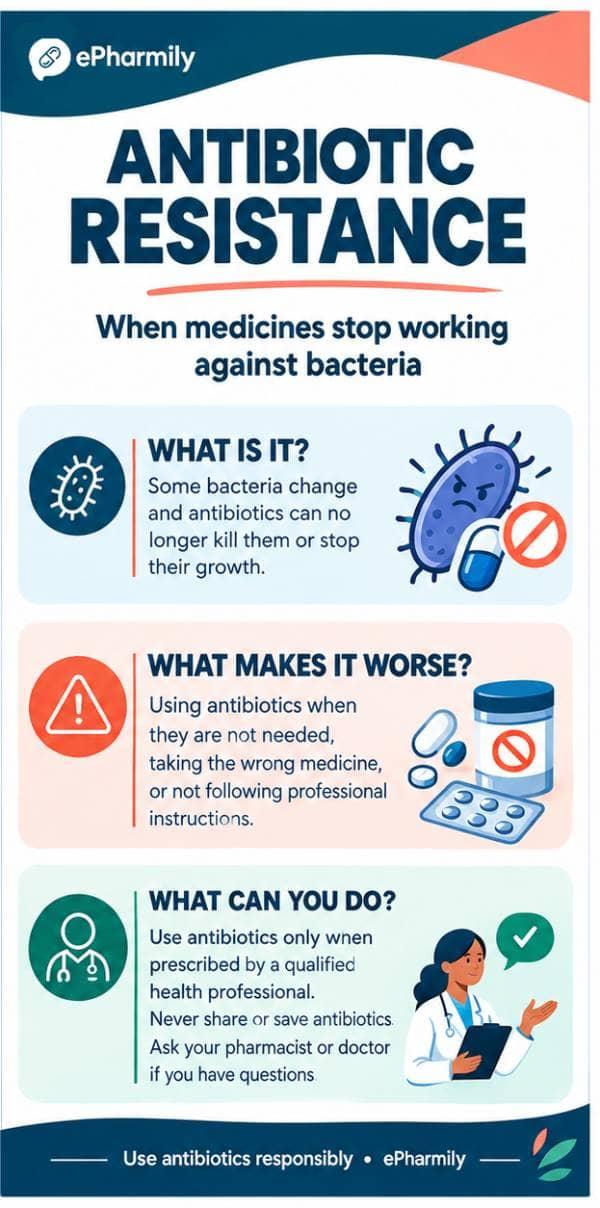
Antibiotic resistance occurs when bacteria develop the ability to survive medicines that would normally kill them or stop their growth.
This does not mean that the human body becomes resistant to antibiotics. Instead, the bacteria change and become harder to treat.
According to the World Health Organization (WHO), approximately one in six laboratory-confirmed bacterial infections worldwide in 2023 was resistant to antibiotic treatment.
Common Mistakes People Make When Using Antibiotics
1. Taking Antibiotics Without a Prescription
Some people buy antibiotics without consulting a qualified healthcare professional. This can lead to using the wrong medicine or taking it when it is not needed.
2. Using Leftover Antibiotics
Keeping antibiotics from a previous illness and using them for a new illness can be harmful. The medicine may not be appropriate for the current infection.
3. Sharing Antibiotics With Others
An antibiotic prescribed for one person may not be suitable for another. Different illnesses require different treatments.
4. Taking Antibiotics for Viral Infections
Antibiotics do not work against viruses. Taking them for a cold or flu will not cure the illness and may expose you to unnecessary side effects.
5. Not Following the Prescribed Instructions
Taking antibiotics differently from how they were prescribed can affect treatment. Follow the instructions provided by your healthcare professional, and ask a pharmacist or prescriber if you are unsure what to do.
How Can You Help Prevent Antibiotic Resistance?
You can help reduce antibiotic resistance by taking these steps:
-
Use antibiotics only when prescribed by an appropriate healthcare professional.
-
Follow the prescribed dose and instructions.
-
Do not share antibiotics or use someone else's medicine.
-
Do not save leftover antibiotics for future illnesses.
-
Ask a healthcare professional whether antibiotics are necessary for your illness.
-
Practise good hygiene, wash your hands regularly, and keep vaccinations up to date where recommended.
The Role of Pharmacists in Promoting Responsible Antibiotic Use
Pharmacists play an important role in promoting the safe and responsible use of medicines.
They can explain how prescribed antibiotics should be taken, discuss possible side effects, identify potential medicine interactions, and help patients understand why antibiotics should not be used unnecessarily.
If you have questions about an antibiotic, speak with a pharmacist or your prescriber rather than guessing or changing how you take it.
Usuários verificados

Ads.
Ads.
Categorias
Leia mais
A strong pharmacy CV is key to advancing your career. Whether you're a fresh graduate or an experienced professional, a well-crafted CV will help you stand out in the competitive job market. Always, have this in mind. " Your CV is your first impression to potential employers". If you're looking to boost your chances to landing your dream job, here are 10 ways to improve your...
In the ever changing world of pharmacy professional, staying connected, informed and up to date is key to success. Whether you're a pharmacist, pharmacy technician, researcher, or student, having a dedicated platform that fosters collaboration, knowledge-sharing, and career growth is invaluable. That’s where ePharmily comes in. Hence, in this article we will explores the reasons why...
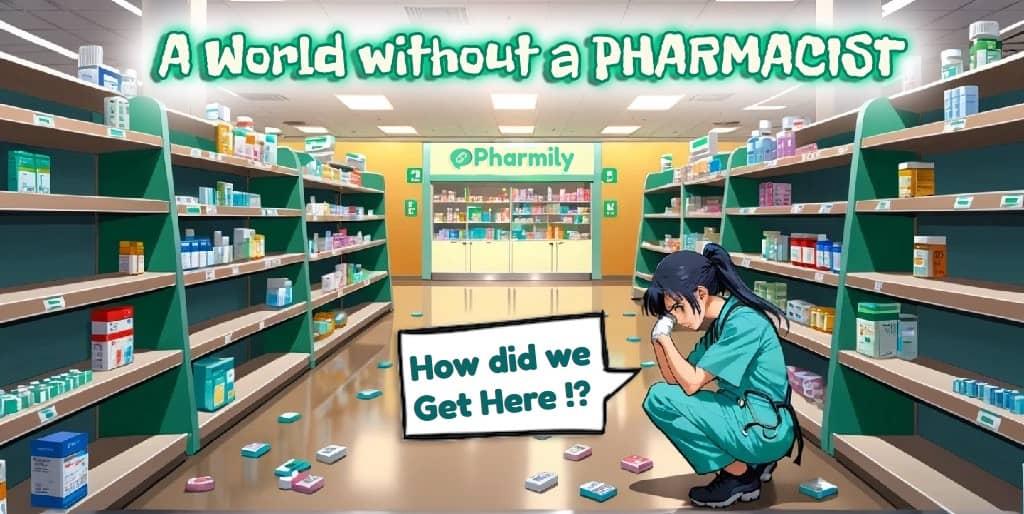
In the year 2055, the world had come to rely on technology like never before. The sky was dotted with drones, cities buzzed with self-driving cars, and in the medical field, artificial intelligence and automation had become the bedrock of healthcare. This was a "World without Pharmacists" People no longer felt the need to physically visit doctors or pharmacies; everything could be done with...
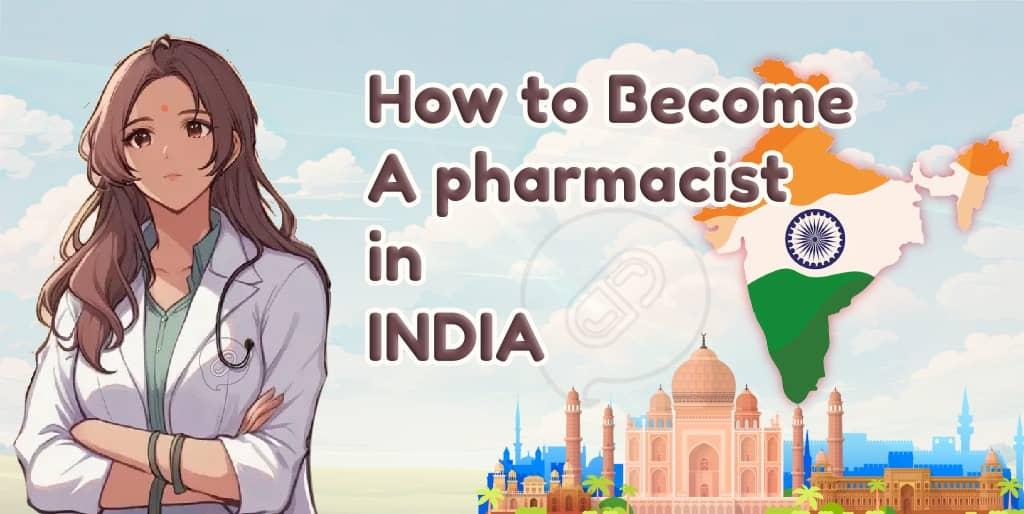
Becoming a Pharmacist in India can be a dynamic and essential profession in India’s healthcare ecosystem. Pharmacists ensure the safe and effective use of medicines, counsel patients, and contribute to medical research and pharmaceutical manufacturing. With the growing healthcare needs of the country and expanding pharmaceutical industries, pharmacy offers a promising career path for...
Hey there, future pharmacists! Let’s be real—pharmacy school is no walk in the park. Between endless lectures, mountains of notes, and the constant pressure to exams, it’s easy to feel like your personal life has taken a backseat. But here’s the thing: you don’t have to sacrifice your well-being to succeed in pharmacy school. Balancing pharmacy school and...